The 50/30/20 Rule: A Simple Budget to Transform Your Finances
Feeling overwhelmed by your finances? The 50/30/20 budgeting rule is a simple, intuitive framework designed to help you regain control without drowning in spreadsheets. It provides a clear path to managing your money, covering your necessities, enjoying your life, and building a secure future. Let's break down how it works.
What is the 50/30/20 Rule?
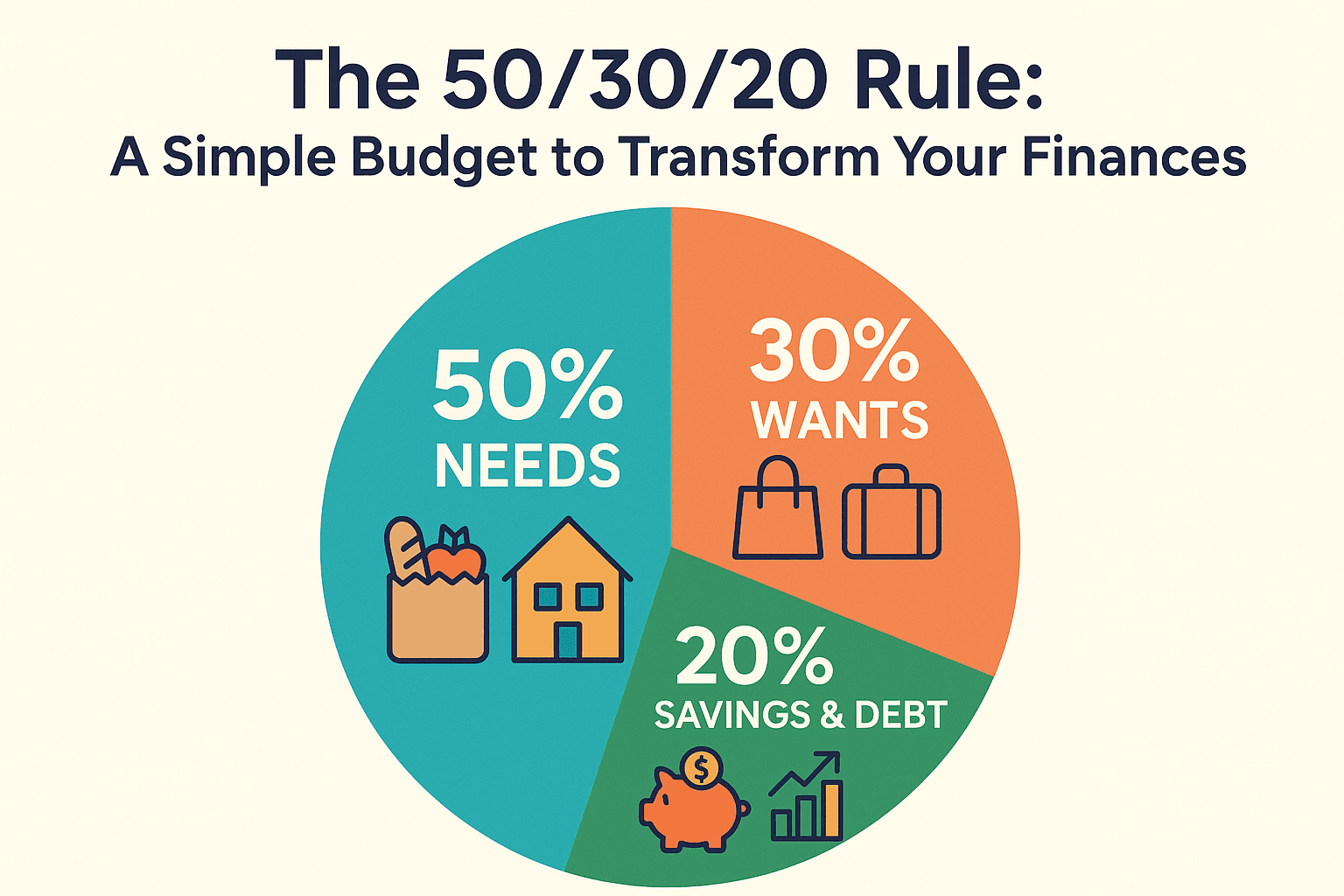
The rule is simple: you allocate your after-tax income into three spending categories:
- 50% for Needs: The essentials you can't live without.
- 30% for Wants: Your lifestyle choices that make life more enjoyable.
- 20% for Savings & Debt Repayment: Your financial goals and safety net.
50% for Needs
Half of your take-home pay should go towards the absolute essentials. These are the expenses you must pay to live safely and work effectively.
- Housing: Rent or mortgage payments.
- Utilities: Electricity, water, gas, and internet.
- Transportation: Car payments, gas, insurance, and public transit passes needed for work.
- Groceries: Basic food and household supplies.
- Insurance: Health and car insurance premiums.
- Minimum Debt Payments: Only the minimum required payment on your debts. Extra payments go in the 20% category.
If your Needs exceed 50%, you may need to look for ways to reduce your core expenses, like finding a cheaper apartment or cutting back on utility usage.
30% for Wants
This category is for all the non-essential spending that enhances your lifestyle. It's the "fun" part of your budget that you can adjust most easily when you need to save more.
- Dining Out: Restaurants, bars, and coffee shops.
- Entertainment: Movie tickets, streaming subscriptions (Netflix, Spotify), concerts, and hobbies.
- Shopping: New clothes, gadgets, and home decor that aren't necessities.
- Travel: Vacations and weekend trips.
20% for Savings & Debt Repayment
This is the most important category for your financial future. It's where you pay yourself first and actively work towards your long-term goals. Aim to allocate at least 20% of your income here.
- Emergency Fund: Building a fund that covers 3-6 months of essential living expenses.
- Retirement Savings: Contributions to a 401(k), IRA, or other retirement accounts.
- Extra Debt Payments: Paying more than the minimum on student loans, credit cards, or personal loans to get out of debt faster.
- Other Savings Goals: Saving for a down payment on a house, a new car, or other large purchases.
Putting It Into Practice
The 50/30/20 rule isn't rigid; it's a flexible guideline. If you have high-interest debt, you might shift some of your "Wants" money into the "Savings & Debt" category temporarily. The key is to be intentional with your spending and ensure you're making progress towards your financial goals every month.